
Corporations.
In-house travel programmes. Policy applied at booking, duty-of-care tracking and one coded invoice.
For corporationsFor hotels and resorts
A car for any guest, in 1,200 cities, posted to the room and confirmed before the concierge finishes the sentence.
Concierge requests are not planned bookings. A price and a confirmed car in under a minute, at the desk, without ringing round three operators while somebody waits.
Posted to the guest folio like any other on-property service, or billed to the property and settled monthly. The guest signs nothing and pays no driver.
Checkout mornings, conference departures, a storm that grounds flights. Capacity when you need it, and nothing standing idle in the garage when you do not.
A hotel ground transport account lets a property arrange chauffeured cars for its guests without owning vehicles or employing drivers. The concierge or front desk books on the guest's behalf, the ride is charged either to the guest's folio or to a property account, and the vehicle is supplied by a licensed local operator held to one standard.
It is used in three ways: as a replacement for a house fleet, as overflow capacity when demand exceeds the cars a property owns, and as coverage for anywhere the guest is going that the property cannot serve itself. Airport transfers, day trips, intercity journeys and evening travel are all booked through the same account.
This is usually the part that decides whether an account gets used, so it is worth getting right at the start.
| Arrangement | Guest experience | Who settles with RYDES | Use when |
|---|---|---|---|
| Post to folioThe usual choice | Appears on the room bill like a restaurant charge | The property, monthly | You want the ride to feel like a hotel service |
| Property accountNot passed on | Nothing to pay, nothing on the bill | The property, monthly | Included transfers, recovery gestures, VIP arrivals |
| Guest pays directBooked for them | Their own card, at booking, no driver payment | The guest | You would rather not carry the transaction |
| CommissionRevenue to the property | Their own card, at booking | The guest, with commission to the property at the rate in your agreement | You treat ground transport as ancillary revenue |
Commission is paid to the property rather than to individuals. Where a brand's own policy permits staff recognition schemes we will follow it, but we will not put an arrangement in place with a member of your team without the property confirming it in writing first.
A guest asks for a car to an address forty minutes away, at seven tomorrow morning. The concierge has about ninety seconds before the interaction stops feeling like service and starts feeling like an errand.
That is the whole design constraint. One login, a firm price for any route in any covered city, a confirmed vehicle, and a note on the folio, inside the time the guest is prepared to stand there. No calling round, no waiting for a quote, no coming back to the room later with a number.

Most properties that run their own cars are not wrong to. They are just carrying costs that only make sense at a utilisation rate very few actually achieve.
| RYDES account | Owned house cars | Local rank or app | |
|---|---|---|---|
| Capital | None | Vehicles, replacement cycle, residuals | None |
| Payroll | None | Drivers, cover, holiday, training | None |
| Idle cost | You pay per ride | Paid whether it moves or not | None |
| Peak capacity | Scales on the morning | Fixed at whatever you own | Unpredictable |
| Insurance and compliance | The operator's | Yours, per vehicle and per driver | Not yours, and not visible |
| Beyond your own city | 1,200 cities on the same account | Not possible | Not possible |
| Brand consistency | One standard, verified before they get work | Entirely yours, which is the advantage | None |
| Guest billing | Folio, property account or guest card | Folio | Guest pays the driver |
If you own house cars and they are busy, keep them. The common arrangement is house cars for the short, high-frequency runs where your own branding matters, and an account for airports, out-of-city journeys and every peak your fleet cannot absorb.
Six moments, and the first one happens before they have even arrived.
The most valuable and most often missed. A booking link in your pre-arrival email lets the guest arrange their airport transfer while they are still thinking about the trip, rather than joining a taxi queue on landing.
Flight-tracked collection with the pickup moving if the aircraft does, and 60 minutes of free waiting from actual landing. Airport transfers.
Dinner, meetings, theatre, shopping. Point to point for single journeys, or hourly where the guest wants the car to wait rather than be re-summoned. Hourly hire.
The checkout peak, which is the hardest thing for an owned fleet to absorb. Multiple vehicles at the door across a two-hour window without anyone standing in the lobby waiting.
A car and chauffeur for the day, on a route the guest sets, with somebody who lives there. Considerably better received than a coach tour, and often cheaper than two excursion tickets.
The next city, the port, the second property in the group. One booking, door to door, luggage never leaving the vehicle. City to city.
A named chauffeur, known in advance, tracked throughout. A materially better answer than a rank at two in the morning, and one your duty manager can stand behind.
Weddings, conferences and buyouts, quoted as a vehicle plan with a coordinator rather than as a stack of separate bookings. Events and roadshows.
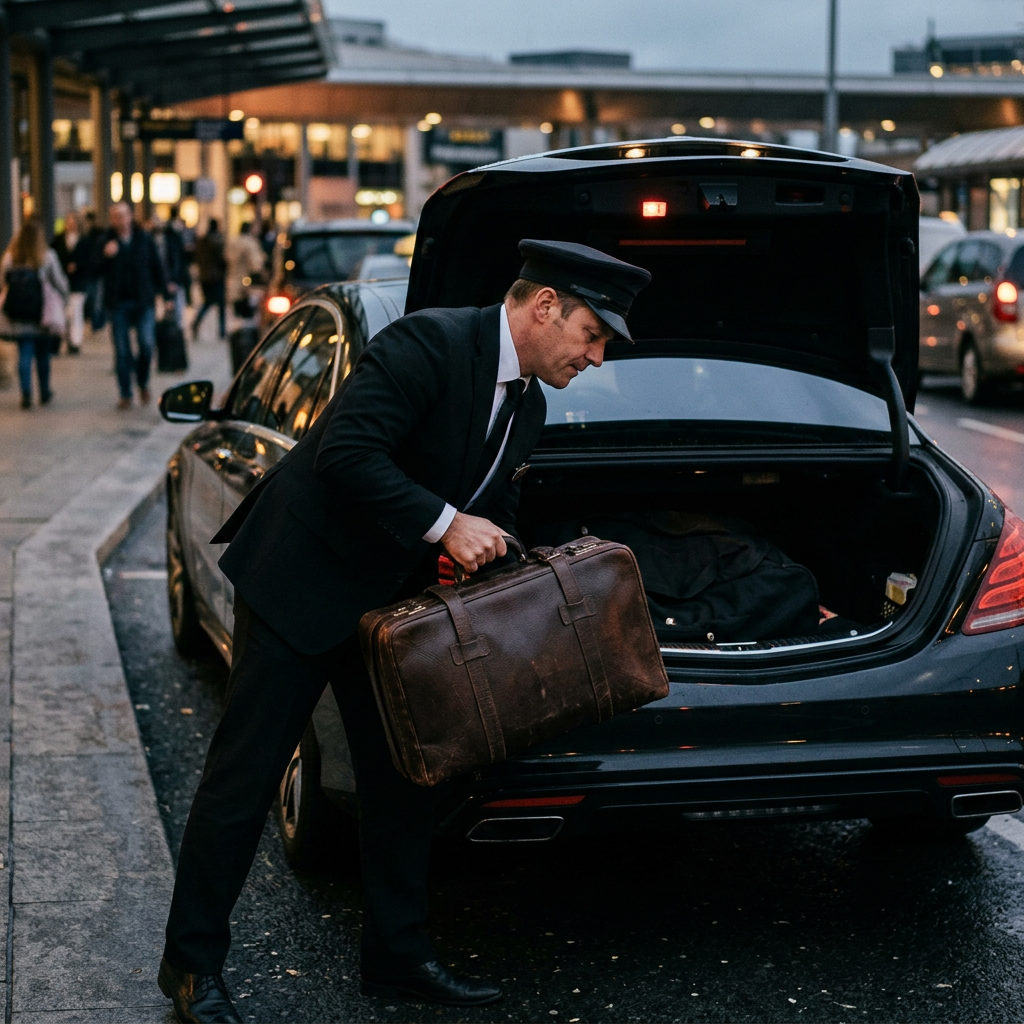
By the time a guest reaches your desk, they have already arrived. Whatever they paid to get from the airport went to somebody else, and if it went badly, the first ten minutes of their stay were spent in a queue.
A booking link in the pre-arrival email or the confirmation changes who captures it. The guest arranges the transfer when they are still planning, arrives met and settled, and the ride is on your folio rather than on a receipt from a stranger. It is the single highest-return thing a property account does, and it costs nothing to set up.
The account is the same. The problem it solves is not.
| Property | The real problem | Usually configured with |
|---|---|---|
| City hotel | Checkout peaks and airport runs your house cars cannot cover | Folio posting, overflow use, pre-arrival link |
| Airport hotel | High volume, short runs, unpredictable timing | Property account, standing arrangements, group vehicles |
| Resort | A long transfer from an airport with very little local supply | Property account, larger vehicles, day trips and excursions |
| Serviced apartments | Longer stays, corporate guests, no concierge desk | Guest-facing booking link, corporate cost centres |
| Private members club | Discretion and absolute consistency | Property account, First class defaults, named contact |
| Hotel group or brand | The same guest experience across properties in different countries | Group agreement, per-property billing, group reporting |
Six steps, and your team is trained in about twenty minutes because there is very little to learn.
Property details, billing arrangement, which vehicle classes your guests should see, and who at the property can book. No fee and no minimum volume.
Concierge, front desk, duty managers and guest services, each with their own access. Bookings made by one are visible to the others, so a shift change does not lose anything.
Quote, confirm and note it on the folio inside a minute. The guest gets the chauffeur's name, photo, vehicle and number three hours before pickup.
Through a link in your pre-arrival email, your app or a code in the room, still attributed to your property for billing and reporting.
Live status visible to your desk, and 24-hour dispatch reachable by the guest or by you. Problems reach your duty manager rather than surfacing at breakfast.
Itemised by guest, room, date and journey, reconciling against folio postings. Commission, where you take it, is settled on the same statement.
To open an account or ask something not covered here, write to reserve@rydes.co or call +1 888 881 7933.
A hotel ground transport account lets a property arrange chauffeured cars for guests without owning vehicles or employing drivers. The concierge or front desk books on the guest's behalf, the ride is charged either to the guest's folio or to a property account, and the vehicle is supplied by a licensed local operator held to one standard. It is used as a replacement for a house fleet, as overflow at peaks, and as coverage for journeys beyond the property's own city.
Yes, and it is the arrangement most properties choose. The charge appears on the folio like any other on-property service, the property settles with us monthly, and the guest pays no driver and signs nothing. Posting is by integration with your property management system where that is supported, or by a nightly posting file where it is not.
Yes, where you want ground transport treated as ancillary revenue. The guest pays their own card at booking and commission is settled to the property on the monthly statement at the rate in your agreement. Properties that prefer to post to folio and take a margin at that point can do that instead; the two arrangements are alternatives rather than additions.
Commission is paid to the property, not to individuals. Where your brand's own policy permits staff recognition schemes we will follow that policy, but we will not put an arrangement in place with a member of your team without the property confirming it in writing first. We would rather lose a booking than create a compliance problem inside your hotel.
For a pre-booked ride, whenever you asked for it. For an immediate request, it depends on the city and the hour, and the portal will tell you the earliest realistic pickup rather than an optimistic one. What is always immediate is the price and the confirmation, which is usually what the guest at the desk actually needs.
Not necessarily. If your house cars are busy and your own branding on the short local runs matters to you, keep them. The common arrangement is house cars for high-frequency local journeys and an account for airport transfers, out-of-city travel and every peak the fleet cannot absorb. Owned vehicles only make financial sense at a utilisation rate that few properties reach.
Yes. There is no minimum volume and no charge for a dormant account, so many properties open one purely for checkout mornings, conference departures and weather disruption. It costs nothing sitting idle, which is precisely the argument against owning the marginal vehicle.
That is your choice. Confirmations and travel documents can carry your property's identity rather than ours. The chauffeur arrives in business dress in an unbranded premium vehicle, so nothing about the car contradicts your positioning either way.
Yes, and this is the highest-return use of a property account. A booking link in your pre-arrival email, your app or a code in the room lets the guest arrange their airport transfer while they are still planning. The booking stays attributed to your property for billing and reporting even though you did not make it.
This is one of the strongest cases for an account, because remote properties have the longest transfers and the thinnest local supply. Larger vehicles for luggage, fixed pricing on a two-hour transfer that guests would otherwise be quoted wildly for, and day trips out from the resort on the same account.
Yes, booked as hourly hire. The guest sets the route, the chauffeur lives in that region, and the car waits between stops rather than being re-summoned. It is usually better received than a coach excursion and often costs the guest less than two excursion tickets.
Yes. Classes can be restricted or defaulted per property, so a luxury property can present First class as standard while an airport hotel presents Business. Group and van classes can be enabled only for the staff who handle events rather than shown at the front desk.
One statement per period, itemised by guest, room, date and journey, so it reconciles against your folio postings without anyone reconstructing anything. Commission, where you take it, appears on the same statement. Groups can be billed per property and reported together.
Yes. A group agreement sets consistent terms and a consistent guest experience across properties in different countries, while each property retains its own billing, its own vehicle class defaults and its own reporting. Group-level reporting sits on top of that.
It comes to us and it is answered. Issues affecting your guests are reported to your property contact rather than absorbed quietly, and operator performance is reviewed continuously against completion, punctuality and feedback. Operators who slip stop receiving work, which is the only remedy that actually changes anything.
Folio posting can be delivered by integration with your PMS where that platform supports it, or by a nightly posting file where it does not. Tell us which system you run and we will tell you honestly which of the two applies before you commit to anything.

Same platform, different relationship to the traveller.
In-house travel programmes. Policy applied at booking, duty-of-care tracking and one coded invoice.
For corporations
Book ground for your clients without becoming the supplier. Commission or net rates, and we do not market to them.
For travel agencies
Airlines, platforms and loyalty programmes embedding ground transport inside their own product.
PartnershipsNo fee, no minimum volume, and an account that costs nothing on the mornings you do not need it.